 |
 The Camera Hunter® Beyond Instinct? Photography and Text Copyright Bill Silliker, Jr. When you enter Yellowstone National Park by way of the Northeast entrance in search of wildlife to photograph, you get the feeling that you might encounter almost anything. Tall mountains lurk behind a dense boreal forest that grows right up to the edge of the road for much of the first ten miles. Occasional openings with creeks and small meadows draw your eyes in search of the elk, moose, deer, bear – perhaps even a golden eagle or mountain lion – and the other species that live in this magical place. Those who hope to see wildlife know that they must drive slowly through these woods. Others, who only want to get through it to get to where they’re going, would do well to drive slowly as well. I drove this road the 25 or so miles out from the Slough Creek Campground in Yellowstone to the Northeast gate in the dark one October morning. Once at the gate, I turned around and drove back into the Park to slowly search for wildlife in
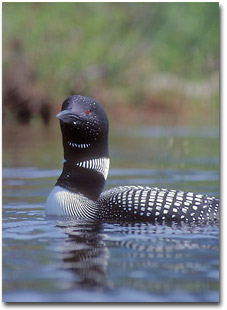
During one such stop a fast moving car flew by. I shook my head, wondering about how little some people appreciate nature. The sight of the crumpled little deer lying in the middle of the road a few miles later ruined that morning’s camera hunt. I knew what happened. That road was empty on the way out. Only that one car had gone by in either direction. Its driver had hit the mule deer in his haste to get to wherever he or she was going. I pulled over beside the little deer and examined it for signs of life. Its awkward posture - rear legs akimbo, neck contorted and head bent to the side, plus its glassy eyes staring at nothing, told the story. Had it been a whitetail in the Maine Woods, old-timers would have called it a “lamb” – a fawn of the year in its first fall. The little deer displayed two bumps on its head where it would have grown its first set of spiked antlers next fall. However, this mule deer would see no more falls. Then I spotted the mother and brother of the road-kill victim. The younger deer looked out from the edge of the forest inquisitively. It seemed to be waiting for its sibling to get up and rejoin the family. What was it thinking as it watched the lifeless body of its brother? Or does a deer think? Does any animal? Loons have an uncanny knack for being able to connect with humans. That’s partly because of the position of their eyes. When a common loon looks right at you, it makes you feel the same way that a steady gaze from a human does. In writing the script for a video about loons several years ago, I wrote a sentence for the narrator’s voice to describe a scene in which a loon approached while staring at the camera: “What do you suppose this loon was thinking as it approached the canoe?” The editor at the publishing company crossed it out. Not satisfied with that alone, he wrote a note beside the excised words: “Bill - birds don’t think.” Really? While some folks are apparently taught that, many who have learned most of what they know about animals by spending time in their presence might question that statement. Consider the bald eagle. What guides an eagle to select one nest tree over another? Is it simply instinct? Or is it just luck that they pick a good tree, one that permits them to raise generation after generation of new eagles and that perhaps
And what about bears? You hear about bears getting into trouble because they’re “too clever”. Is cleverness only an instinctive behavior, a natural reaction in response to the desire for food? Or do bears discover ways to get at food because they think it through? Some people claim that moose are stupid. Moose appear stupid when they stubbornly refuse to yield the road to an oncoming vehicle. But could it be that because they are such large animals they have little fear of most other things? Anyone who takes the time to study moose in the field a while will soon learn that they are anything but stupid.Do animals have reasoning beyond instinct? Or is it all, as my loon script editor said, just by the numbers? Wildlife photographers need to pay attention when they’re in the field with their subjects. The best wildlife photographers all do. They also learn as much as possible by reading the available research, books and articles about the species that they want to photograph. As a field naturalist camera hunter, I’ve come to some conclusions about the ability of many animals to think and perhaps even to feel emotions. Some might condemn that. But even a classically trained animal behaviorist cannot be absolutely certain how animals arrive at their decisions about how to respond to any given situation. Look again at the image of the mule deer youngster as he waited for his dead brother to get up off that Yellowstone road. What do you suppose he was “thinking”? Catch yours in the good light. BS-NPN 012 Editor's Note - The Mooseman is leading 3 special nature photography workshops with Great American Photography Weekends next year, beginning with “Saving Nature Through Photography” February 12-16, 2003. Learn how to use your camera to help nature while photographing the largest concentration of bald eagles in the lower 48 States at Klamath NWR in Oregon & California. For more information, visit his website at www.camerahunter.com Comments on this column? Send them to the editor.
Bill has been an instructor of wildlife and nature photography with L. L. Bean's Outdoor Discovery Program since 1992 and is a member of the Fuji Film Talent Team. Bill is a past Board member of the North American Nature Photography Association (NANPA) and a professional member of the Outdoor Writer's Association of America (OWAA). He maintains a web site with tips for wildlife photographers at www.camerahunter.com and is editor of a site for all wildlife enthusiasts at www.wildlifewatcher.com. Bill's work with moose has been featured on National Public Radio's "Living On Earth", his book on bald eagles was featured on CSPAN's "Book TV" and his Daybreak 2000 image of the Millennium's dawn on NBC's "Today Show". To see the 2002 dates for Bill's slide talks for camera clubs sponsored by Fujifilm Professional, as well as a schedule of Bill's book signings and workshops with L.L. Bean, Great American Photography Weekend and The Maine Photographic Workshops, click here. 

|
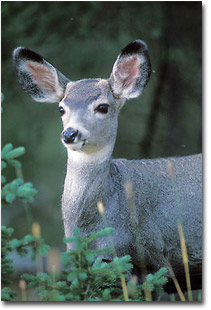 the early morning light. Where the openings presented themselves – a stream here, a patch of grass there – I pulled over and paused to glass for animals hanging out along the dark forest edge with 10X binoculars.
 will sustain a huge nest for other sets of eagles for tens of years after they’re gone?
 Maine wildlife & nature photographer Bill Silliker, Jr. - The Camera Hunter® - has photographed at many wild places in North America, with the results published in Audubon, Backpacker, Field & Stream; National Wildlife, Outdoor Photographer, Outdoor Life, Sports Afield and many other magazines; in exclusive calendar projects on loons, moose, wildlife and Maine's Baxter State Park, and in his books: Just Eagles; Uses For Mooses; Moose: Giants of the Northern Forest; Just Loons; and Maine Moose Watcher's Guide and his latest book, available in July 2002, Saving Maine:An Album of Conservation Success Stories.
|
|