California Condor
by Brian Gatlin
Canon 7D, 100-400mm @ 400mm, handheld.
1/1250, f/7.1, ISO 400.
Crop to 82% (14.7 of 18MP)
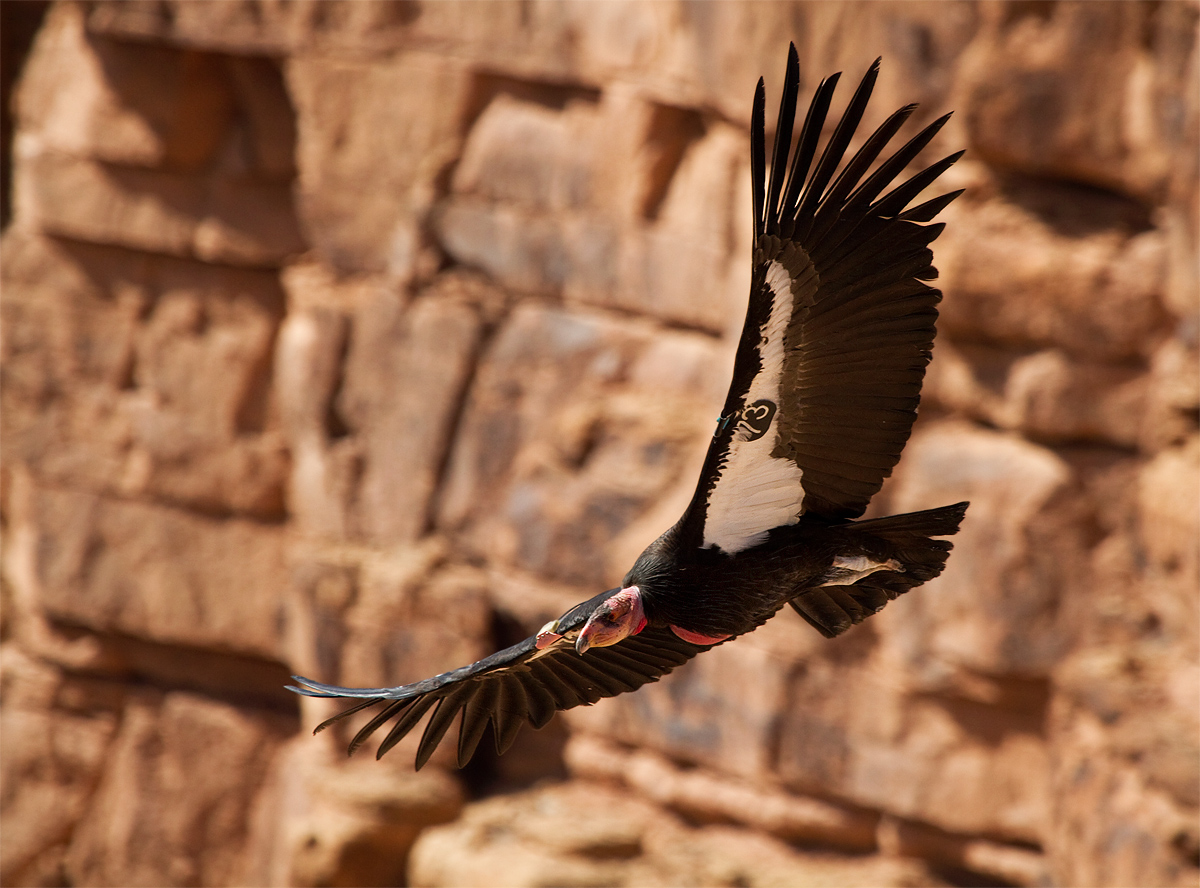
One of the (many) special things about living where I do is the opportunity to see California Condors on a fairly regular basis. This shot was taken at Navajo Bridge, one of the condors' favorite hangouts.
I'm sure that purists would prefer not to see the tags and radio transmitters, but they are a critical aspect of the realities of the condors' existence today. Pushed to the edge in the early 80s, captive breeding has slowly brought condor numbers back up. Each reintroduced bird is carefully monitored, and the radio transmitters have saved the lives of many sick birds and revealed the cause of death (lead poisoning) of many others. Without intensive management and some long-term changes, we won't have the chance to enjoy these spectacular birds. So I'm ok with the tags (and look forward to a day when they won't need them). This bird, 73, is an 8 year old male.
I like the banking pose and the recognizable canyon walls in the background here. One challenge with condors is getting the eye to show well.
Comments and critiques appreciated. Please view larger version if possible.

Comments
15 commentsThis is a very cool shot. Excellent exposure. You are right about the eye. Reminds me of trying to get a turkey vultures eye as well. Love the background with the recognizable wall. The tag does not bother me at all in fact I think it adds a dimension to the photo that has it's story to tell. It shows how critical the balance is amongst these huge flyers. Really good sharpness on this one. I have never seen one in the wild as I'm sure is the case with most people. You are very lucky to live in an area where they live. Kudos!!! Dave
Nice detail , pose, and BG.
Sandy r
I do not mind the tags in the least. Thanks for sharing this!
Sharon, you DON"T want to know where I was standing, but probably not for the reason you think. This was taken from a highway bridge (fairly low speed limit, and a good 6 feet between the white line and the rail, but still....). There is a pedestrian bridge (the former highway bridge before the new one was built) 100 yds away, but the birds seem to be much better seen from the current bridge....
Luke, as rare as they are (only ~350 in the world), they are actually very commonly seen. On the South Rim at Grand Canyon Village, they are present Mar-Oct and seen nearly every day, and in the other months, they are pretty easy to find at Navajo Bridge. I have another bird against blue sky that I may post soon.
Steve, thanks, I agree--this is one of the rare cases where I find that the absence of catchlight doesn't hurt, though I do wish that the eye itself stood out better. They eyes are mostly dark, and the red irises don't stand out very well from the face either.
Rich M., probably best that I stay away from politics here, but Reagan is not among the politicians that Arizona can claim (and I'll decline comment on those it can).
May
It's able to give us a lot of information on the bird and on the living habitat.
Really good job!
Marcello Oliva, Italy
www.marcellooliva.com