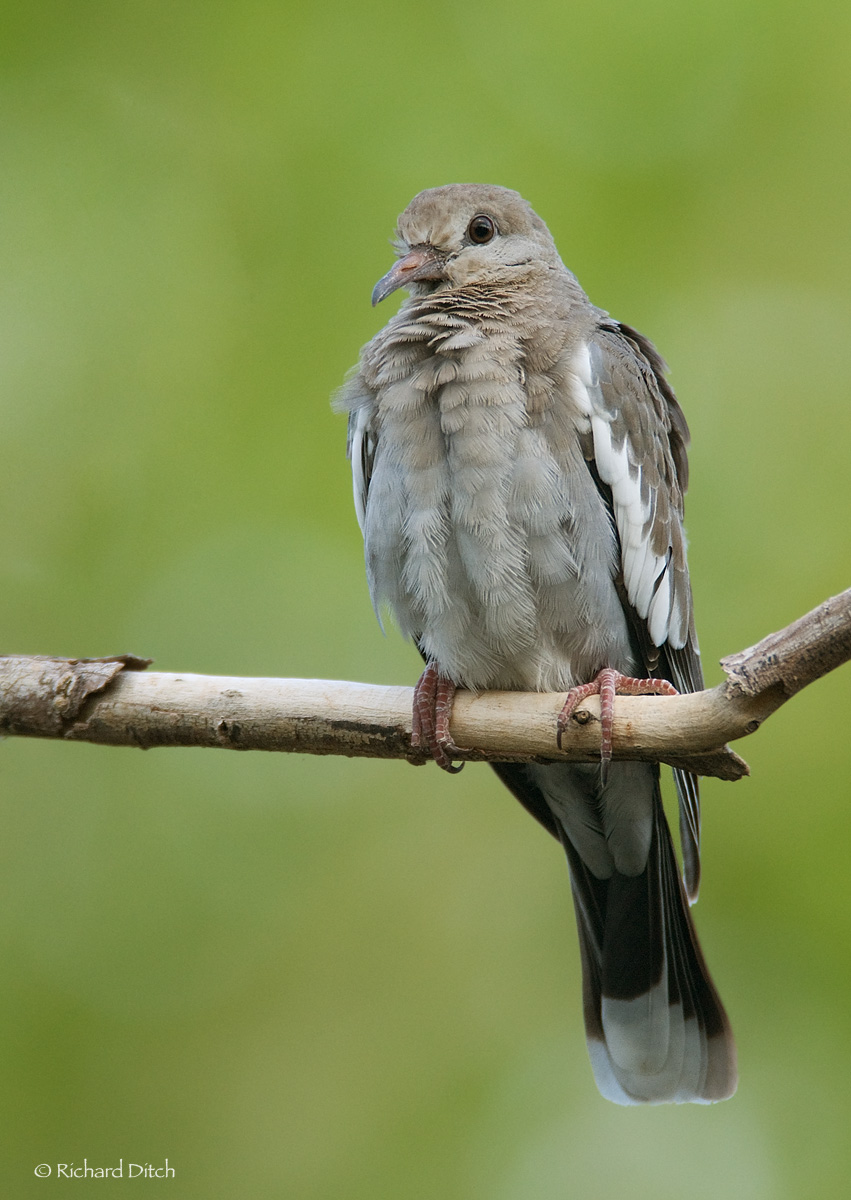
White-winged Dove
by Richard Ditch
White-winged Dove (Zenaida asiatica)
Place: Water Ranch, Gilbert, AZ, USA
Date: September 8, 2010
Equipment: Nikon D200, Nikkor AF-S 300/2.8 & TC20E (2x), G1325, RRS BH-55, Sidekick
Exposure: ISO 400, Aperture priority matrix metered, 1/80th @ f/5.6
Raw, PS CS3 on Mac G4, modest crop
We're still pushing 107 degrees here in Phoenix, so I hav en't beden out much and haven't got much new stuff to post. This White-winged Dove was one of few subjects when I braved the heat a month ago. This natural perch is a favorite resting place for white-wings, mourning, and more rfecently for Eurasian Collared Doves.
Not very exciting, and I too wish the bright area by the tail wasn't there.
As always: honest critiques requested; all comments appreciated. Larger image provided as always.

Comments
18 comments"not very exciting" - don't forget about half the posters do not live in the USA; we'd love to see one.
cheers
Rob
This is really a very nice image. The soft white spot does not bother me in the least. Nice relaxed pose and soft muted colors. The background sets it off ncely. The DOF looks solid from head to tail. Don't be too hard on yourself Richard. This is a nice image of a beatiful bird.
I really like this ruffled Dove. Great detail and background. The bright area doesn't bother me.
I've enjoyed to seeing it.
Hi Richard,
For me the white patch isn't that much of an issue, admittedly, the shot would be improved if it wasn't there but it's no big deal. As for the rest of the image, it's well exposed with very good detail, sharpness and a BG most would very pleased with. So on a whole no major nits from me and it's a very nice image.
Andy...
The light spot near the tail doesn't dampen the appeal of this image for me one iota. Love the relaxedpose, I can tell this dove was okay with your presence. Lovely natural colors, comp, details and sharpness. It's great how the white of the wings shows so well too.
Dan
This one looks like its been around awhile..I read the other day that they can live 10-15 years in the wild.