Fire in the Hole
by Wayne Jones
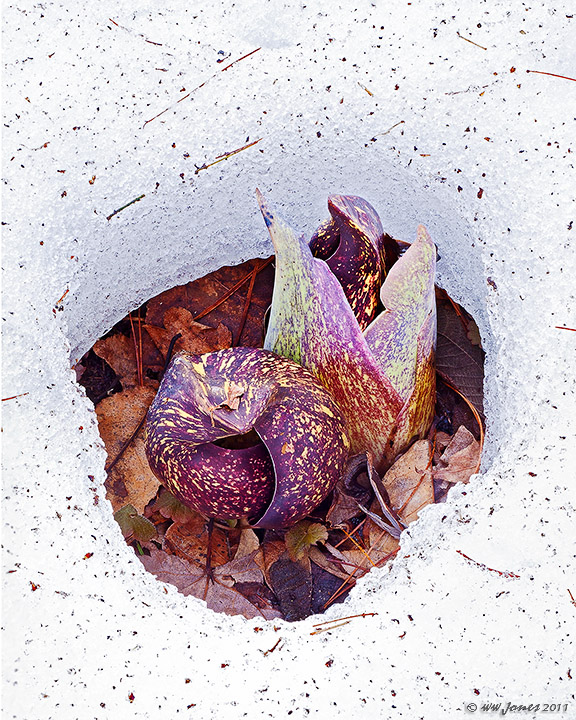
My photographic background is in scientific illustration, and I still can't resist the urge to produce documentary photographs, even if nobody would consider hanging these images on the wall. This one illustrates the ability of the eastern skunk cabbage to melt the snow around it. I am also posting another view of this plant in the Macro Gallery which shows the flower head inside of the hoods seen here.
Where I live, the skunk cabbage is the first flower of spring. It's growth in the snow is made possible by thermogenic respiration, producing as much heat as a small mammal, as well as carbon dioxide. The heat produced from the plant's stored starches keeps the temperatures inside the hood around 60 degrees F. (15 C.) or higher, even when the outside temperatures are well below freezing. The heat makes little holes in the snow, and along with CO2 and a foul odor, attracts carrion-seeking insects , which serve as pollinators.
Canon 50D
Sigma 17-70mm.
0.6 sec. @ f/20; ISO 100
Tripod; Mirror up
Two exposures focus-stacked in CS5

Comments
9 commentsDocumentary and artistic at the same time. Thanks for the science lesson as well.
pat
Bob