Glacier Detail
by Eva McDermott
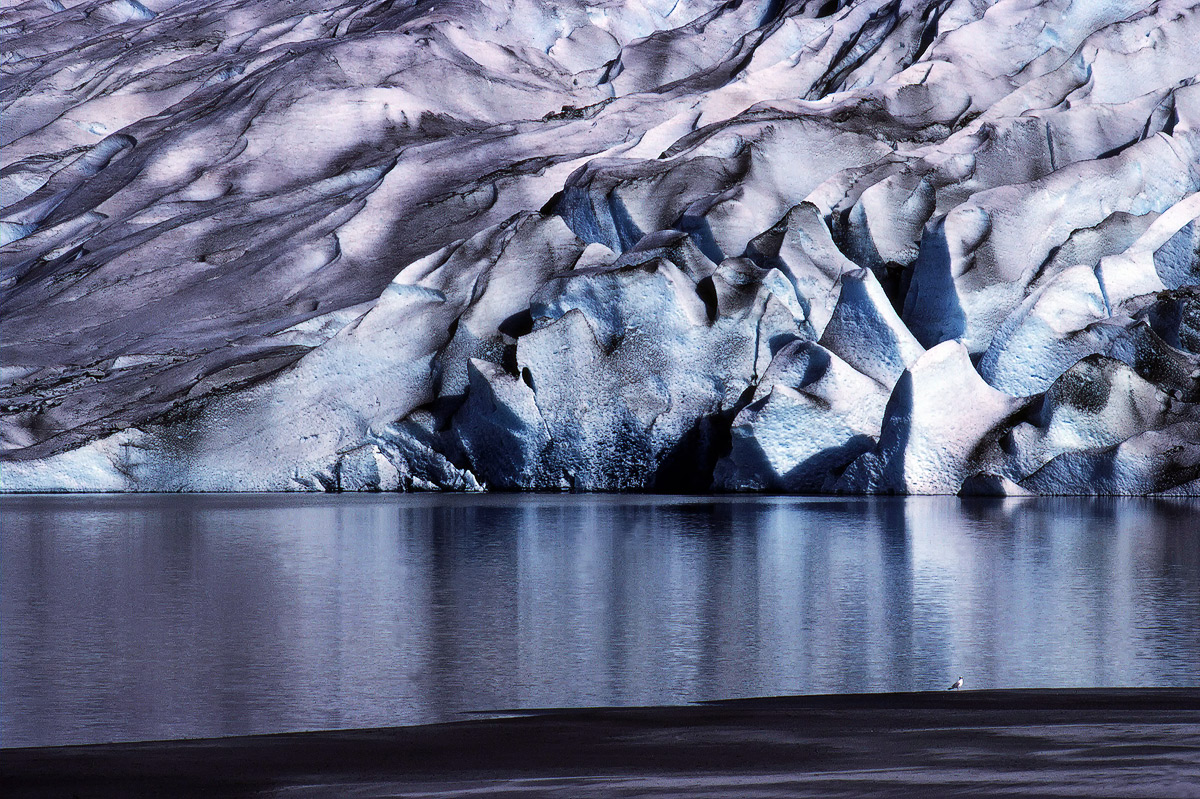
Mendenhall Glacier, Juneau, Alaska 1983. This is a scanned 35mm Kodachrome slide taken with my Olympus OM-4 and probably a 200mm telephoto lens. I have found Kodachrome to be more difficult to scan than my Ektachrome transparencies. Kodachrome scans look much more grainy than is actually visible in the transparency (some of which I have printed on Cibachrome, many moons ago and they look crystal clear). I cleaned this one up with Define 2. Interested in your thoughts. Other than liquid scanning is there a better approach to scanning Kodachrome slides?
Thanks for looking and for any input, comments, and critiques.

Comments
19 commentsChris
Wow, never would have guessed Kodachrome. I too have always heard that the Kodachromes were difficult and different to scan. I guess the larger resolution file shows issues as you stated, but you did a great job bringing this to the web. The colors are distinct in the glacier, but not too overbearing. The scene is beautifully captured and I love the almost metalic looking reflection as well as the graphic nature of this. the gull works beautifully and I can also see a different and equally compelling nature image without the bird; just two different perspectives. The contrast is heavy, but I think quite fitting for the environment.
I'm enjoying your trip through the archives....
Lon
I like the composition and the detail just as they are, but I'm not a fan of the pinkish purple visible in some areas of the image (probably a product of the scanning process?). I'd consider monochrome.
Thanks for posting this, and please come back to visit our sad little glacier. There's an outside chance it will pull out of the lake by this fall. I hope that's not the case.
Ed
This shot has to witnessed big I would imaging, to really appreciate the scale (especially with that neat little bird in the lower third!)
Kodachrome is a bugger to work with (not a lot of post processing latitude) In fact, I use to hdr exposure blending with slide scans. An over exposed scan, and a normal scan, sandwiched together and blended years ago.
As a former high end drum scanner operator, I can tell you nothing beats an oil mount scan. The grain and pours are filled with baby oil or with mounting fluid. Baby oil works best, but a bit messy with clean up. I have a $350,000 drum scanner in shop that sits dusty these days !
There are a plenty of service bureaus around the nation that still do oil mount drum scanning. The going rate for an average scan was $40 pleasing color to disc.
Nice!
Nick Bristol
Lone Rock, WI
Peter
like the the ice/rock formations, particularly those that are triangularly shaped. The
diagonal lines are also a plus. Of course, the presence of the bird gives an already
very good image some extra bazazz. Well composed and correctly exposed in my
opinion.
lucy