Nature Photographers Network
This is the preserved archive of the original Nature Photographers Network. The community continues at naturephotographers.network.
Ram Island Light
‹ PreviousMan & Nature GalleryNext ›

Ram Island Light

by Harry Lichtman

Gallery: Man & NaturePosted July 27, 2011228 views8 comments
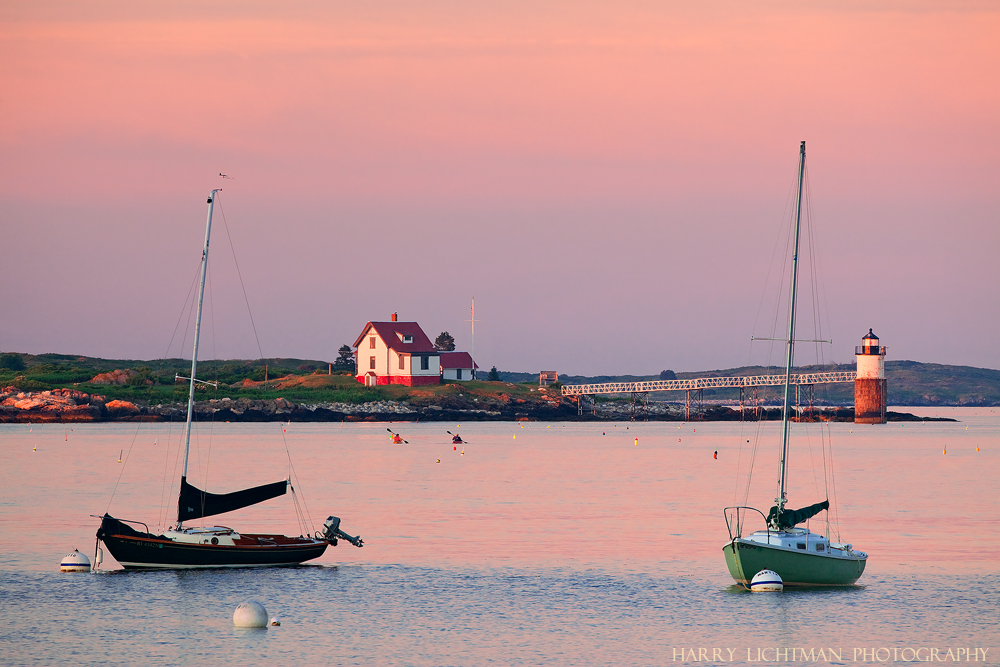
Was up in the Boothbay area of Maine this weekend more for R&R than photography, but the place sure lends itself to image making. Saw this lighthouse during a bike ride the prior day, did the pre-visualization of what the scene might look like at sunrise, and returned the next day. A pretty sunrise, but nothing too crazy. I think the kayakers ended making the image much more interesting. A 2 image blend was taken at different ISO and shutters speeds to prevent blurring in the FG boats, as the chop and wind moved them around a bit in the low light. I have other shot with some boat movement that give a more impressionist feeling.

Canon 5DII, Canon 100-400 IS

Comments

8 comments
Comment posted by Eva McDermott on July 27, 2011 at 4:32 PM
Wonderful light Harry. I do think the kayakers add to the scene.

BTW - I know this spot well.
Registered on January 4, 2009, 1015 Posts, 13229 Comments
Comment posted by Allen Brooks on July 27, 2011 at 6:27 PM
Great shot, love the light, wish I was there. You must be a professional photographer. For me photography is R&R. I've noticed in several posts the photographer talks about blending images. Is this using the HDR part of photoshop or is this another technique. Thanks.
Registered on July 27, 2011, 262 Posts, 2597 Comments
Comment posted by Kah Kit Yoong on July 27, 2011 at 8:36 PM
What a sweet scene. The light is gorgeous.
Registered on September 27, 2006, 636 Posts, 10682 Comments
Comment posted by Harry Lichtman on July 27, 2011 at 9:51 PM
Allen - Blending refers to combining 2 different exposures, or possibly a single image processed more than one time during the RAW file conversion. HDR software uses multiple images to extend the dynamic range of the image, but the blending can be done manually using layers in various software. In this case, the dynamic range wasn't an issue, and well within the range of my camera's sensor. Different focal slices may also be blended yielding an image with unlimited DOF. Several frames taken at different ISO could also be blended to create areas where action has been stopped or slowed without changing aperature & DOF. A water fall shot is an example wehre this might be useful to retain detail in both fast or slower moving water. Several of these could even be combined for a single image!
So you see, things can get complicated! The problem I ran into for this image was low light level at sunrise, and moving boats due to the wind and ocean chop. Sunrise usual yields calmer conditions in bays, and you can see that portions of the bay are calmer than other areas. Depth of field is a limiting factor with a long zoom, which I used. Stopping down my lens to its max would have reduced quality and rendered the boats real fuzzy, probably not recognizeable. I used a higher ISO and focused on the boats at f16 and made an exposure, then quickly focused on the kayaker and made another exposure at a lower ISO and f11 to reduce noise but still allow DOF and a shutter speed that would capture the kayakers relatively sharp. Since the background was not moving, that was not an issue, as long as the DOF was great enough. I manually stacked the images in PS then alllowed the sharpes parts of each to show through. I prefer to blend images manually even though it takes longer. I find I get realistic results and the process makes me study the image more and decide if I really think it's worth the time to blend it. So, this image may have been possible in a single shot after cropping a wider angle shot at much higher ISO and smaller aperature, but the quality would not have been nearly as good. I strive for the abiltiy to make large prints for clients if needed, even though they may only end up 3 x 5 inches in a magazine!
I guess the best thing to do is decide what you want the final image to look like, and determine if any blending is needed at all. Then choose your blending tool to achieve it. It forces you to really think about your final image way before you take the shot. Hope that helps and not to wordy :biggrin: Harry
Registered on September 17, 2010, 304 Posts, 3507 Comments
Comment posted by Allen Brooks on July 27, 2011 at 10:16 PM
Harry,

Thanks for the explanation. I'll have to try it some time.

Allen
Registered on July 27, 2011, 262 Posts, 2597 Comments
Comment posted by Peter Conway on July 28, 2011 at 11:20 AM
Pretty scene with sweet light. :smile:

Peter
Registered on June 25, 2007, 347 Posts, 3913 Comments
Comment posted by Mark Seaver on July 31, 2011 at 12:00 PM
Man, this is a New England classic. Love that soft pink sunrise.
Registered on January 23, 2011, 1103 Posts, 17270 Comments
Comment posted by Walter Rowe on August 3, 2011 at 2:58 PM
Terrific image Harry. That's a travel photography post card for New England if ever there was one.
Registered on November 1, 2003, 85 Posts, 314 Comments