Leaf-nosed Bat
by Charlie VanTassel
Thanks everyone for the comments on my last post.
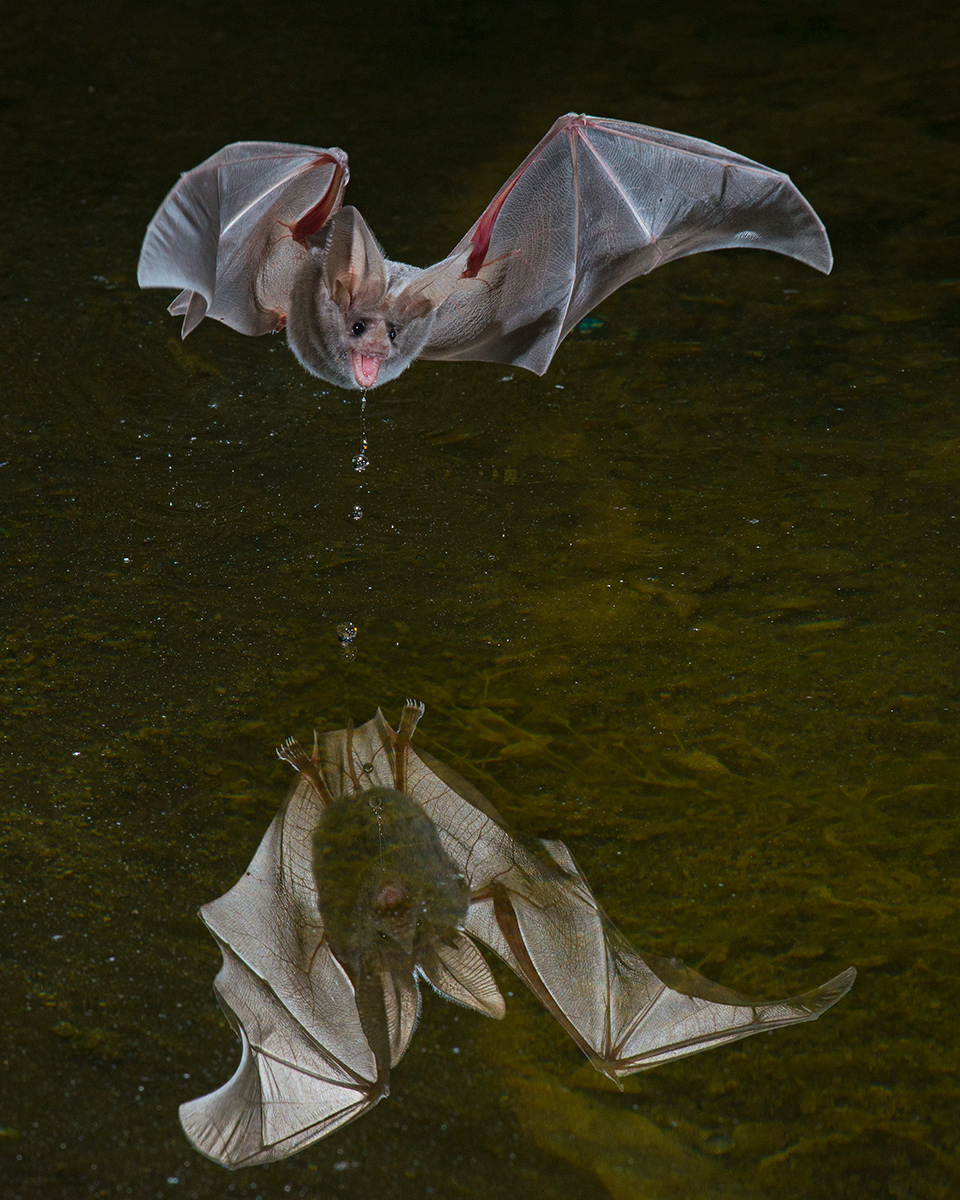
A happy Bat.
Here is another species. One of the things I like about this shot is that you can see details in the reflection not seen in the top view. For instance, you can see the feet (count the toenails) and tail details from the underside.
Same settings as last time.
I am actually using 2 cameras (one D800 and one D800E)aimed at slightly different areas. This way I'm reasonably sure to catch the Bat in one of them. Both are hooked up to the same trigger system and fire at the same time.

Comments
17 commentsThanks a bunch for sharing these...
Brad
Here is some info copied from a previous post, updated a little as I get smarter:
These two links should get you started. The first shows the general setup. I am using a home made trigger, but I also have a Nero Trigger which works as well. Instead of infrared, I use the Nero Trigger on the laser setting to trigger the camera. You'll need a laser pointer that is aimed at the sensor on the Nero trigger. When the Bat flies through the beam, it triggers the camera and flashes. You can find the Nero Trigger on line.
Camera is set on manual to sync with the flashes at 1/250. F16 - f22, iso 400 or so (you can experiment, but the lower the better). Flashes on manual at 1/16 power to get a high flash speed. You'll need 4 flashes. Lens is also set on manual focus. Prefocus on the spot where the Bat is most likely to go through the beam. Usually if you watch them for a while you can see that they fly into the wind and always come to the same spot. You can guide them by screening off most of the surface and just leave a 1 x 2 meter "runway" for them to swoop into for a drink.
The best time to get them is just after sundown and just before sunrise, but they'll come sporadically all night long. You'll need to set up your camera to run off of a 12 volt battery so that it can be on all night, otherwise you'll have to stay up all night changing batteries. These triggers keep the camera in "on" position, so there is quite a battery drain. My Nikon D800 can use a 12 volt adapter so that I can power it off of a car battery. Also, you'll need battery packs for the flashes. Basically you set up in the late afternoon and leave everything on until next morning. Make sure to check your focus, lighting, etc. before leaving the setup be. On a typical night I get around 200 photos.
http://www.dailymail.co.uk/sciencetech/article-1213851/Stunning-shots-thirsty-bats-swooping-lick-water-garden-pond.html (You won't need the "Bat Detector")
http://nerotrigger.com/
This is very similar to the multi flash photography used on Hummingbirds. It is the high speed of the flash, and not the shutter speed of the camera, that freezes the action. Camera at f/16 - f/22 gives you the depth of field to make sure that you get them sharp.
Last night I counted approximately 90 Bats coming out of my Bat Box at sunset. You'll need to find a small pond that the Bats use for drinking. Not as hard as it might sound.
By the way, I am not a Flash guy. I'm still learning. Feel free to take my settings and tweak them to what works best for you. I know that there is a way to figure out exactly what all of the settings should be, but I haven't read that book yet so I just experiment until it works. I bring my laptop out into the field, and pull the card out (put another in and keep taking pictures of course) after the first hour or so to see how things look, then go back to make adjustments. Once everything is right you can go to sleep if you did your job well.
Ken Archer
What I will say is this:
This is why I encouraged my daughters to join NPN and why I myself joined. Yes, the inspiration from truly exceptional natural images taken by skillful photographers...but more than that, the creative thinking that is behind the creation them, and the generous sharing of tips and techniques as you have so graciously provided here.
Thank you for posting these, of course, and for being so forthcoming in how you created them, but much more for challenging us to step outside the normal boundaries we impose on our craft and try some of the crazy ideas we come up with!
Grt, Ingrid.
Perfect reflection, great capture
Guy Nelson