
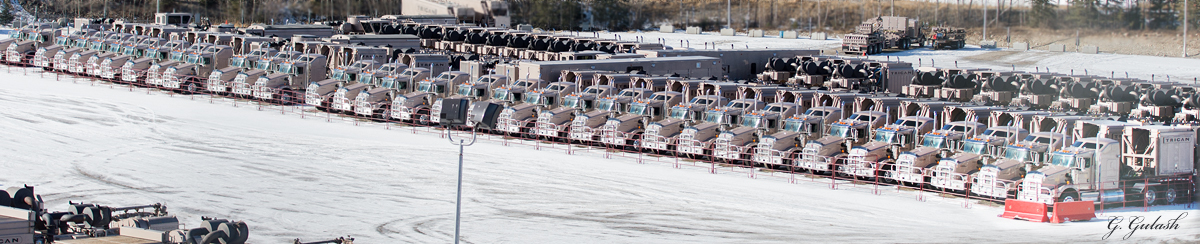
by Gary Gulash
Fracking (hydraulic fracturing) is a process used to extract natural gas from geologic shale deposits. The process is under intense scrutiny by environmentalist for what it may be doing to our fresh water deposits. On a CBC radio program last week I heard an independent scientist explain that in Alberta there is no requirement for fracking companies to reveal the identity of what they are pumping into the fracture zones, thought that was rather frightening!!!
This photo was taken in the small town in Alberta's foothills where I live. There are over a hundred large Kenworth "Frac" trucks in this photo in a single company's storage yard. There are many companies involved in fracking, I think you can do the math.
D4, 70-200VR II
Comments
4 commentsVery interesting and .........very disconcerting, eh?
Bill Reichert
Nr Chicago
Natural gas is often described as generating lower CO2 emissions than oil or coal for the same amount of energy produced (which is correct). I have even seen natural gas described in papers as "no emissions, pollution free" (which is not correct).
One fact that is "never" mentioned in the media is that methane has a much higher climate forcing effect than CO2 on an equal mass basis, i.e. it is a much more powerful GHG than CO2. Why is the climate forcing effect of methane important given that we burn it and it then turns into CO2 (and water)?
The GHG effect of methane becomes an issue if natural gas were to escape into the atmosphere on its journey from production (incl. fracking) to combustion. Does methane escape? Yes. How much? There are various numbers out there.
I assume that the overall GHG footprint of natural gas will see increased attention in the future.