King of the night
by Marsel van Oosten
It's been ages since I last posted here. The past five months I've been traveling all over the place with very little time in between trips. Also, we moved from Amsterdam to Cape Town, which kept me occupied as well. In two days time our annual tours in Africa will start again, so I'll be off the grid most of the time until late August.
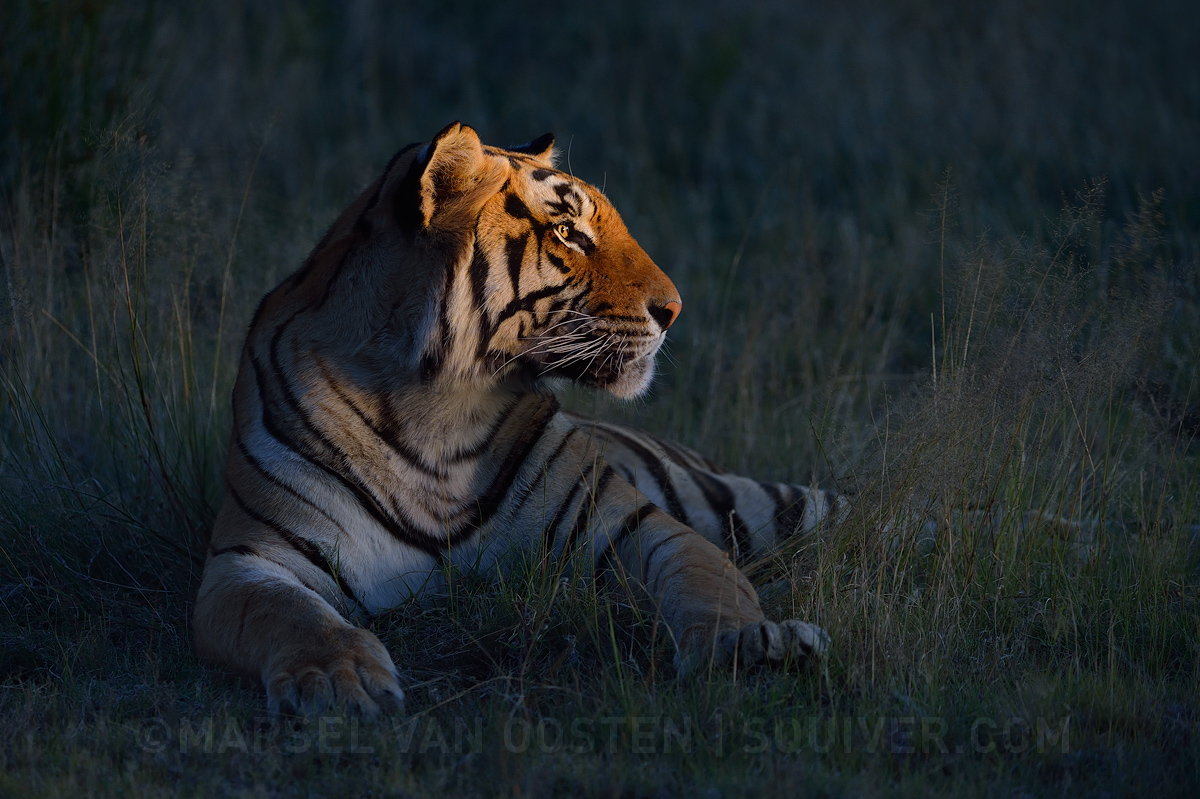
Here's a shot from our most recent Tigers & Leopards tour in South Africa. For this image I used two vehicles; one for myself and one for the lighting. I first positioned my vehicle for the right angle, I then used my radio to position the other vehicle for the light.
The tiger is an endangered species. Poaching for fur and body parts and destruction of habitat have simultaneously greatly reduced tiger populations in the wild. At the start of the 20th century, it is estimated there were over 100,000 tigers in the wild, but the population has dwindled outside of captivity to between 1,500 and 3,500. Major reasons for population decline include habitat destruction, habitat fragmentation and poaching. Demand for tiger parts for use in traditional Chinese medicine has been cited as a major threat to tiger populations. As long as ignorant people in China and Vietnam believe that tiger parts have medicinal value, the tiger will never be safe.
India is home to the world's largest population of wild tigers, but only 11% of the original Indian tiger habitat remains, and it has become fragmented and degraded.
In an effort to increase the chances of tigers surviving as a species, a so called ex-situ tiger conservation project was started in South Africa. The area was carefully selected to match the tiger's preferred habitat, and over the past decade it has become the most successful tiger conservation project in the world. Six months ago no less than 7 tiger cubs were born in three litters.
There has been critique from people saying that tigers don't belong in Africa, but most of those people don't realize that tigers, lions, leopards and cheetah already once shared the same continent: India.
The bottom line is: If you're serious about saving a species from going extinct, you have to think outside the box, and that's what this project is all about.

Comments
12 commentsI was born and brought up in the mountains in Southern India ..I have roamed around the place for 20 years now....and have not come across a single tiger in the "true wilderness".
I am happy to know that this majestic animal is getting new lease of life ..
Balan Vinod
This is stunning, presumably taken at John Varty's Tiger Canyons a wonderful place.
You have really used spot light to your advantage here, may prefer some more canvas on the right.
Jagdeep Rajput
Very nice shot and an interesting commentary with a good conservation message to boot! Well done.
The rules on what qualifies as a "captive" animal (and thus eligible for inclusion in the Wildlife Gallery) has evolved over the last year. We've considered and debated about this particular facility and while no one disputes the positive contribution or ethics of the facility, images taken within fall under the "captive" category as defined by NPN. The new rules allow the posting of such images in the POP Gallery. So I have taken the liberty of moving image to that gallery. My only other option would be to delete the shot, which would be a shame with such a fine image. If you would prefer the image deleted (over transfer to the POP gallery), please contact either Lon or I and we will do so.
Cheers...
Brad
Marsel, this is flat gorgeous. Like many species it is sad to see the destructive poaching taking place for truly nothing more then total ignorance.
The project you've outlined taking place in Africa is a real ray of hope for the tiger species anyway. Good luck to all those folks with their positive efforts.
These tigers are wild. They can hunt for themselves. A herd of over a hundred wildebeest was wiped out by these tigers in under two years - quite the opposite of captive I'd say. I've got pictures of tigers that caught blesbok, warthog and porcupine (ouch).
So I guess the interesting question is: when is an animal called captive? Is there a golden rule as to how many acres/hectares a fenced reserve needs to be for an animal living in it can be called wild?