
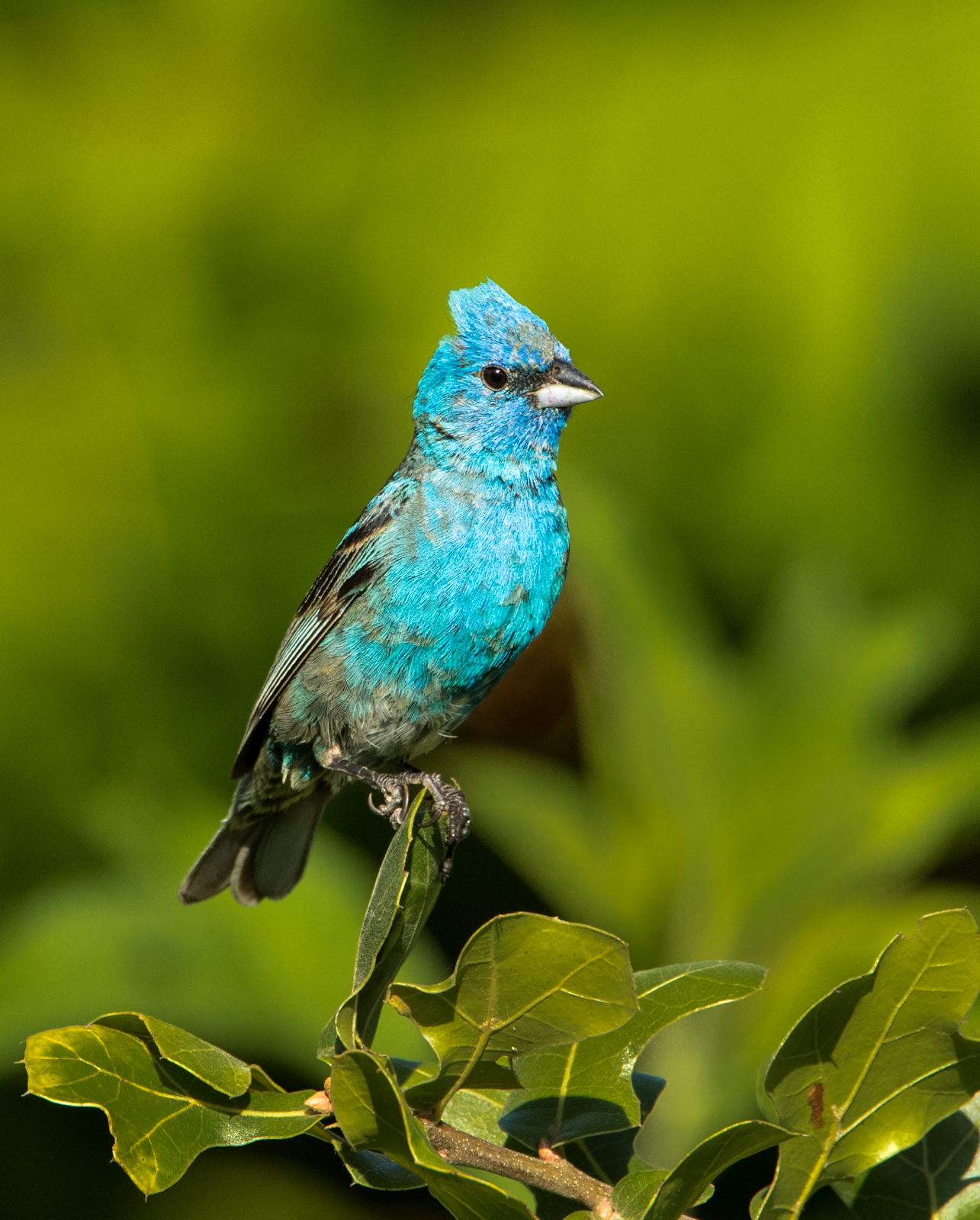
by Greg Morris
This is the same bunting I posted the other day. The distance and crop are about the same, but my settings were different. I may like this one a little more.
7D MKII, 500f4, 1.4x, 1/1000 @ f6.3, ISO 400. I darkened all of the vegetation in LR CC.
Comments and critiques are appreciated.
Comments
11 commentsSuperb detrail in this one, Greg, and I like the bg better than in your first post of htis species. Very well done.
The BG is nice and soft and helps pull the bird out more than your first posting of this species. Well done....................Jim
I also like this image better, although both are really nice. Good choice of F stop to get both the bunting and perch in focus. Curious why you chose to darken the background?
Thanks all.
David, the b/g had quite a bit of reflective sunlight. I just pulled down the luminance of the vegetation.
Sweet BG and vegetation. Absolutely first class detail of the bird!
I have enjoyed your bunting shots Greg. Are they that scruffy normally or are they molting? Feather detail looks great. Well done!
Thanks Phil and Steve.
Steve, I am pretty sure they are molting, the adult males are completely blue except for the darker part of the wing during summer. This may be a juvenile, I am still learning.
I was told by an avid birder and scientist that they are actually black and the sunlight reflects an indigo blue.
Nice pose and good detail in this Greg. I had the same question as David. Just wondering why you chose to darken the BG?
I like it more as well Greg. I like the comp better, and this pose on the single leaf is unusual.
No nits from me, great job on this one
Steve, below is what a biologist from Oklahoma who follows me on Flickr says about the bunting. Thought it was interesting.
"I think this bird is actually a hybrid between the Indigo Bunting and the Lazuli Bunting which is not that unusual in this area as both species are present. Note the wings bars and paler blue over all and whitish on lower belly."
Love the blue and muted green, excellent shot! Ray