Oil on Reddish Egret
by Mia McPherson
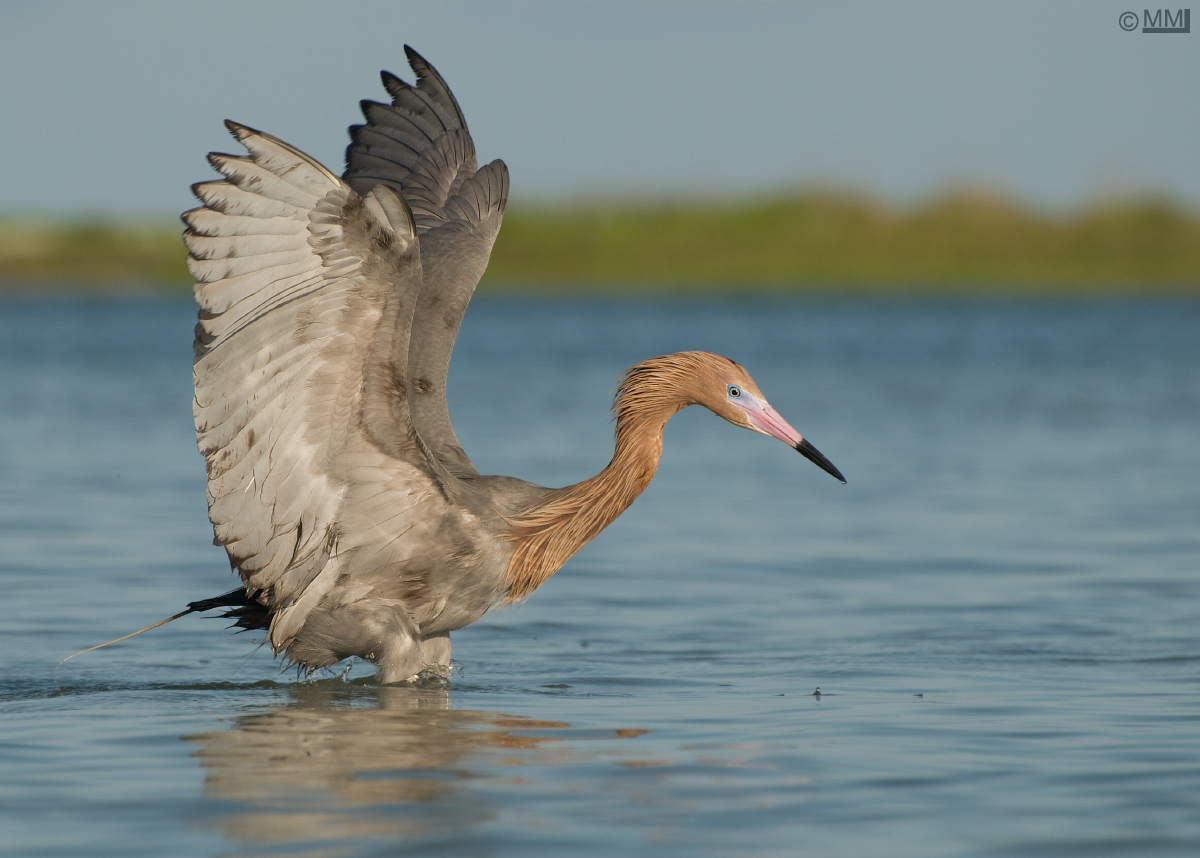
I was out shooting today at Ft DeSoto with a friend of mine and this Reddish Egret gave us quite a show. But through the viewfinder I kept wondering about some dark spots I noticed on the bird's head, tail, the upper and under sides of the wings that are not normally present.
After getting home and viewing my images on my monitor I realized that those dark spots have been caused by oil.
The park ranger has been notified about the oil problem and that this Reddish Egret has oil on it. This side of the bird's head has considerably less oil on it than the other side. All the dark tips of the wing feathers have oil on them and the darker spots you see on the underside of the wing are also present on the upper side. The tail area appears to be saturated.
Hopefully because the oil isn't covering major portions of the bird's body the egret will be ok. It did not effect the egret's ability to perform it's captivating foraging dance.
D200, HH, kneeling in the water, f6.3, 1/1250, ISO 250, 70-300mm VR at 240 mm, 79% of the original image. A larger version has also been posted for closer inspection.
As always, I sincerely appreciate your comments & critiques.

Comments
7 commentsThis was taken on the Gulf coast of Florida, there are no refineries in the area. The oil is probably from a recreational watercraft. The area sees a lot of weekend boaters, fishermen, and skidoos. There is also a boat dock with launch area to the east of the lagoon where this image was taken.
While there is a tragedy inherent in spilling enough oil to kill birds, this image leaves me with the sense of how animals simply move forward and get on with things and do the best they can with the hand they are dealt. It's truly unfortunate when we are dealing the hands and they are bad hands, yet this bird keeps on keeping on with no drama. That is a humbling amount of perserverance.
On a side note, it would take quite a lot of motor traffic to produce concentrations of oil heavy enough to stain a bird like this. Even 2-cycle engines, which are the worst when it comes to adding gas/oil residue to the water, don't put that much in one on one, so I figure there's probably a big ton of motor traffic in the area, possibly coupled with wind/tides that are concentrating the oils in some area of the shallows that the birds are wading through.
Good job getting down in the water with the bird, too.