I think I have a pretty nice field guide on insects. It's thick, heavy and full of hundreds of colored photographs. But, it never seems to have the insect I'm looking for at any given time.

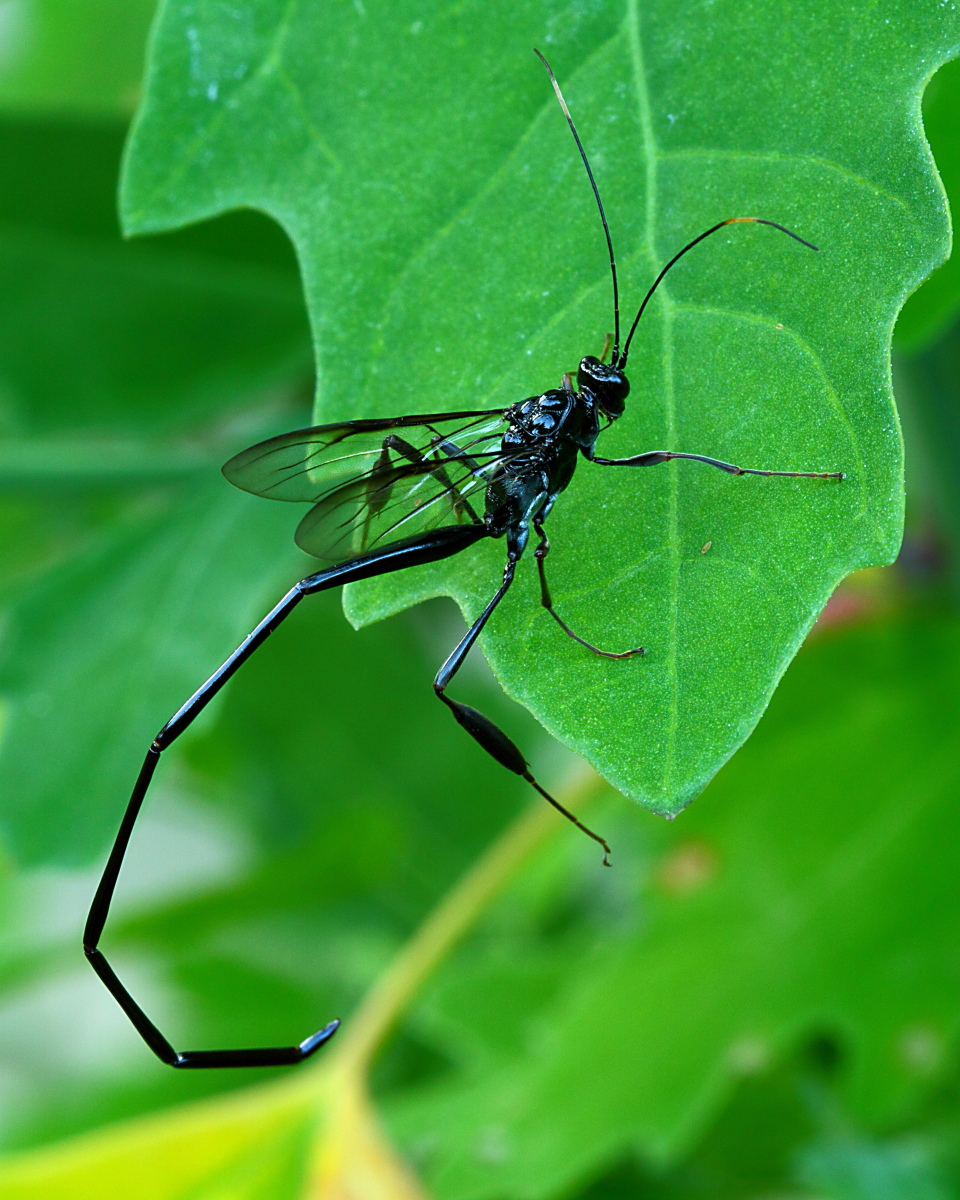
Any ideas on this one?
I thought this was a cool looking bug. I would have liked more detail but with the dark color and POV I don't think there was much more detail to offer.
Canon 7D, Aperture Priority with tripod, 1/6 sec, F/13, ISO 400, 100mm macro, cropped to vertical.
Thanks for looking and all C&C welcomed.
Large version added.

Comments
8 commentsMust have been difficult to expose correctly, love the bluish sheen I see.
Great detail and well composed,
Nice work!
This is one of the best shots of a Pelecinid that I have seen. Getting them all in focus is a real challenge, and the ones I have seen are usually quite active. Excellnet detail and exposure.
Once you get past the Audabon and Peterson guides, there are a lot of specialty books out there to work with. Your library tend to grow pretty quicky, though.
The best single general reference I have run across is "Insects Their Natural History and Diversity with a photographic guide to insects of eastern North America" by Stephen Marshall. It covers the northern half of the eastern United States, west to the Mississippi, with some western species and some southern species as well (but not many). It is about $100 new but well worth it if you do a lot of insect photography.
My primary internet reference is BugBuide.net which is a great reference but you really need to know what you are looking for to easily find it. Pretty much everything you are likely to run across in North America is there but knowing some basic entomology really helps finding what you are looking for.
Here is the logic behind at least starting to id your photo: First glance from the thumbnail- dragonfly or damselfly. There are a couple of things wrong with that. There is should be two paris of wings but only one. Eyes are more wasplike than dragonflylike. Antennea remind me of wasps. The abdomen reminds me of some predatory wasps, especially the ichneumans, but segmented. So I was probably looking for a predatory/parasitic wasp family, which really cuts down on a lot on what I need to look at.
Once I found something that looked reasonable, checking it range, active months and host foods all looked good, thus my guess above for id. All total, about ten minutes of checking. PLEASE don't take the time comment wrong - I've spend a fair number of years learning to id insects so I had a good head start for knowing where to begin for a species I haven't tried to id previously.