Nature Photographers Network
This is the preserved archive of the original Nature Photographers Network. The community continues at naturephotographers.network.
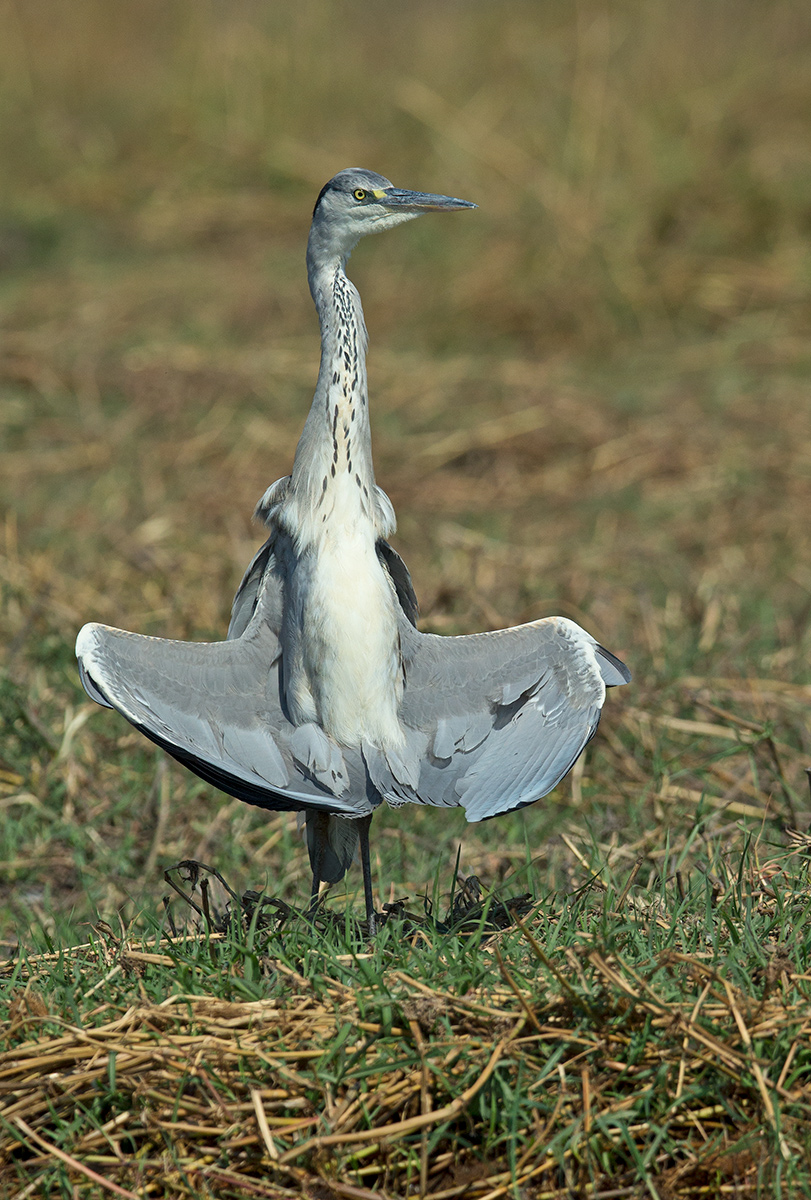
Strange Pose?
‹ PreviousAvian GalleryNext ›

Strange Pose?

by Ken Watkins

Gallery: AvianPosted October 9, 2013175 views8 comments
This Grey Heron is clearly drying its wings, I have seen this pose once before but was unable to get as reasonable image. Taken from a drifting boat on Chobe River, Botswana.
EOS 1DX
200-400 mm F4 1.4x at 513mm
F8
ISO 800
1/3200

Comments

8 comments
Comment posted by Hans Overduin on October 9, 2013 at 10:54 AM
Characteristic pose for this bird - I always call in the 'Yoga'-pose. NIce vertical frame ! Cheers, Hans
Registered on August 31, 2011, 491 Posts, 3807 Comments
Comment posted by Jefferson Silva on October 9, 2013 at 11:07 AM
Interesting. I've never seen such pose.
Nice image!
Registered on December 18, 2012, 162 Posts, 975 Comments
Comment posted by Philip Hodgkins on October 9, 2013 at 1:08 PM
Also known as the "Flasher Pose". Both drying and cooling.
Registered on July 24, 2006, 2741 Posts, 12349 Comments
Comment posted by Ron Dudley on October 9, 2013 at 9:27 PM
Wow, I've never seen that pose before. Fascinating, Ken.
Registered on March 30, 2007, 437 Posts, 10915 Comments
Comment posted by Gary Gulash on October 10, 2013 at 1:32 AM
Cool photo, very sharp and the behavior is great.
Registered on January 28, 2005, 879 Posts, 12098 Comments
Comment posted by Ken Watkins on October 10, 2013 at 9:16 AM
Thanks everybody for your comments,
Hans,
I will bow to your superior knowledge, I am no birder.
Phil,
Certainly looks like he may have a raincoat on!

:biggrin: :biggrin: :biggrin: :biggrin: :smile: :toast:
Registered on December 15, 2010, 1537 Posts, 4877 Comments
Comment posted by Peter May on October 10, 2013 at 3:14 PM
Great shot, Ken. This is called the droop-wing or delta-wing posture; a number of herons and egrets do it, as do wood storks. It's a thermoregulatory posture to expose as much surface area to insolation as possible. The funny thing is they often do it when it's hot out, so it's not necessarily to heat up. Great blue herons frequently do this posture while performing gular flutter, which is a heat-dissipation behavior. Hypotheses about why they do it include a) heating up the skin surface to cause ectoparasites to drop off or move, and b) increasing synthesis of Vitamin D. There are some papers in the biological literature supporting the ectoparasite idea.
Registered on November 1, 2003, 7 Posts, 239 Comments
Comment posted by Ken Watkins on October 10, 2013 at 11:35 PM
Peter,
I have to admit the image from the back certainly looks "nicer" :toast: :toast:
Registered on December 15, 2010, 1537 Posts, 4877 Comments