Nature Photographers Network
This is the preserved archive of the original Nature Photographers Network. The community continues at naturephotographers.network.
YIKES! Run!
‹ PreviousWeekly Challenge GalleryNext ›

YIKES! Run!

by Lucy VanSwearingen

Gallery: Weekly ChallengePosted October 9, 2013128 views8 comments
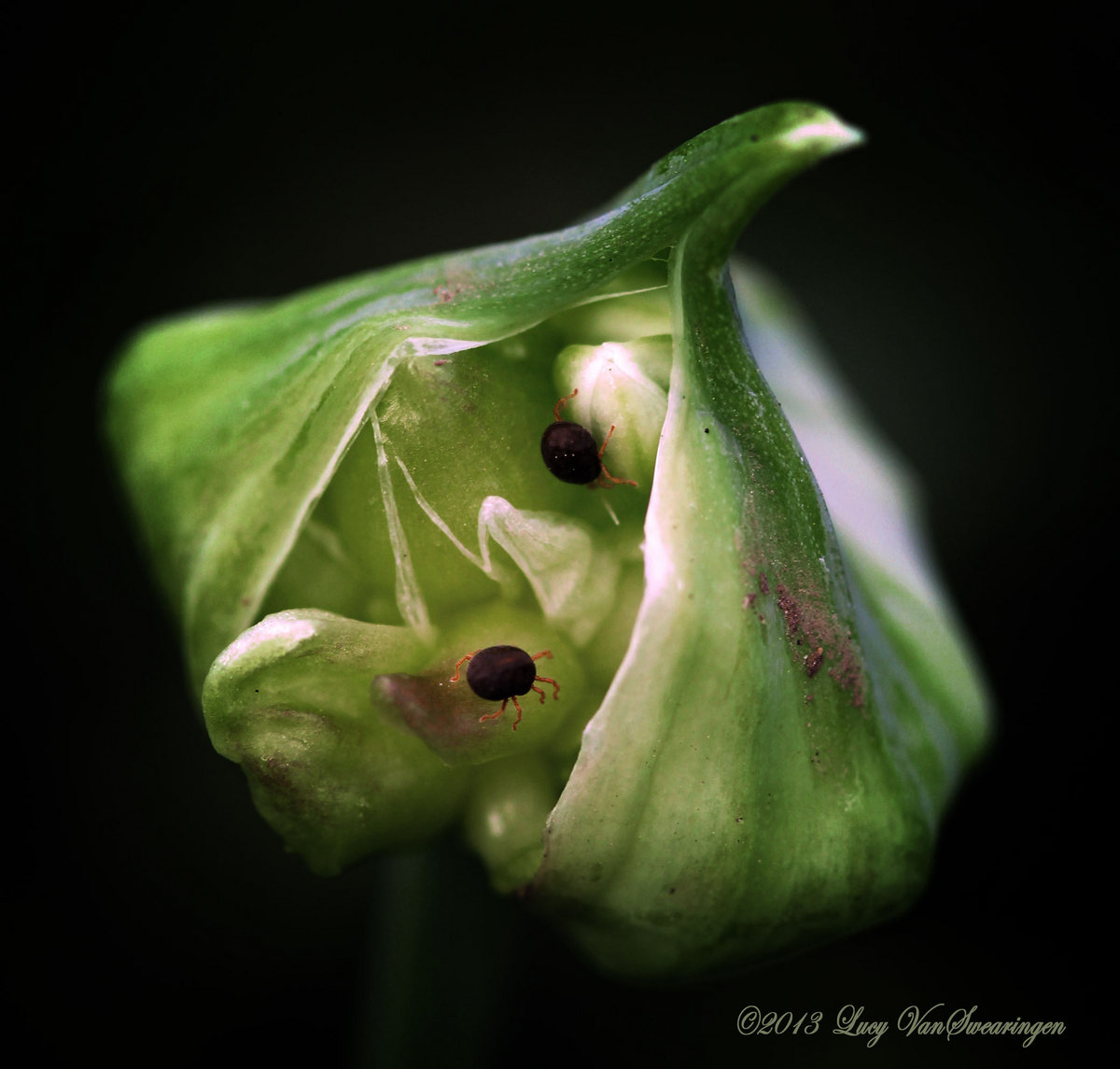
I had just gotten my macro lens and was photographing some wild onions in the grass. I saw some dark specks, that I thought were some kind of tiny seeds. I went inside and loaded up my pics from that morning. To my horror :eek: , I saw that the seeds had legs and spots Yikes ... TICKS! :eek:

As these photos were taken right next to my barn, I will not apologize for eradicating the tiny vermin. My cousin has lyme disease, so I do not tolerate ticks...period! :mad:

Comments

8 comments
Comment posted by scott lanz on October 9, 2013 at 10:24 PM
Excellent detail in the ticks, Lucy. Right down to their legs. Well captured.
Registered on November 14, 2003, 840 Posts, 12902 Comments
Comment posted by John Tobias on October 10, 2013 at 7:33 AM
I like the image, too bad they were not a colorful bug. Good colors and details. Feel the same about ticks, can't stand the little blood suckers. Thanks for sharing.
Registered on September 12, 2009, 2120 Posts, 6455 Comments
Comment posted by Mark Seaver on October 10, 2013 at 12:36 PM
The greens and the details in the bugs are great (they look too tall to be ticks, but I wasn't there). If you turn this 45-50 degrees, it would make a good scary face for halloween. :biggrin: Neat shot.
Registered on January 23, 2011, 1103 Posts, 17270 Comments
Comment posted by Lucy VanSwearingen on October 10, 2013 at 1:16 PM
Mark, I found out, that these are soft ticks. Here is the description according to the Orkin website -

Unlike hard ticks, soft ticks do not have a protective scutum. Their mouthparts also are not readily visible when viewed from above. These mouthparts consist of two palps and one hypostome. The barbed hypostome is capable of penetrating human skin and is not easily removed. In some cases, the hypostome may remain within the host even after the soft tick has been removed.

Some common soft tick species are the fowl tick and the relapsing fever tick. Like hard ticks, soft ticks are known to be vectors of various diseases. Among them are Lyme disease, Rocky Mountain spotted fever, and tick-borne relapsing fever. Proper removal of soft ticks is necessary to reduce the chance of infection.
Registered on May 23, 2009, 800 Posts, 2042 Comments
Comment posted by Barbara Graham on October 10, 2013 at 2:57 PM
Great detail!
Registered on July 27, 2010, 1310 Posts, 5035 Comments
Comment posted by Jim Lockhart on October 10, 2013 at 6:32 PM
Background sets of the plant well and I like the centered composition with just enough space all around. Nicely done.
Registered on February 19, 2013, 91 Posts, 500 Comments
Comment posted by Carolyn Derstine on October 10, 2013 at 8:38 PM
Great macro shot, Lucy! Nice comp, lighting, background, and good focus on the nasty ticks. . .a much better image of them than they derserve! :rolleyes: But very appropriate for this theme. That macro lens looks to be working out real well for you. :smile: Well done!
Registered on February 16, 2011, 610 Posts, 3684 Comments
Comment posted by Mark Seaver on October 10, 2013 at 8:56 PM
Thanks for the very useful added info, Lucy.
Registered on January 23, 2011, 1103 Posts, 17270 Comments