Nature Photographers Network
This is the preserved archive of the original Nature Photographers Network. The community continues at naturephotographers.network.
Krumholz Effect
‹ PreviousMan & Fauna GalleryNext ›

Krumholz Effect

by SandyRichardsBrown

Gallery: Man & FaunaPosted March 22, 2014384 views8 comments
Saddle Road, Volcanoes National Park, Hawaii
Feb 2014

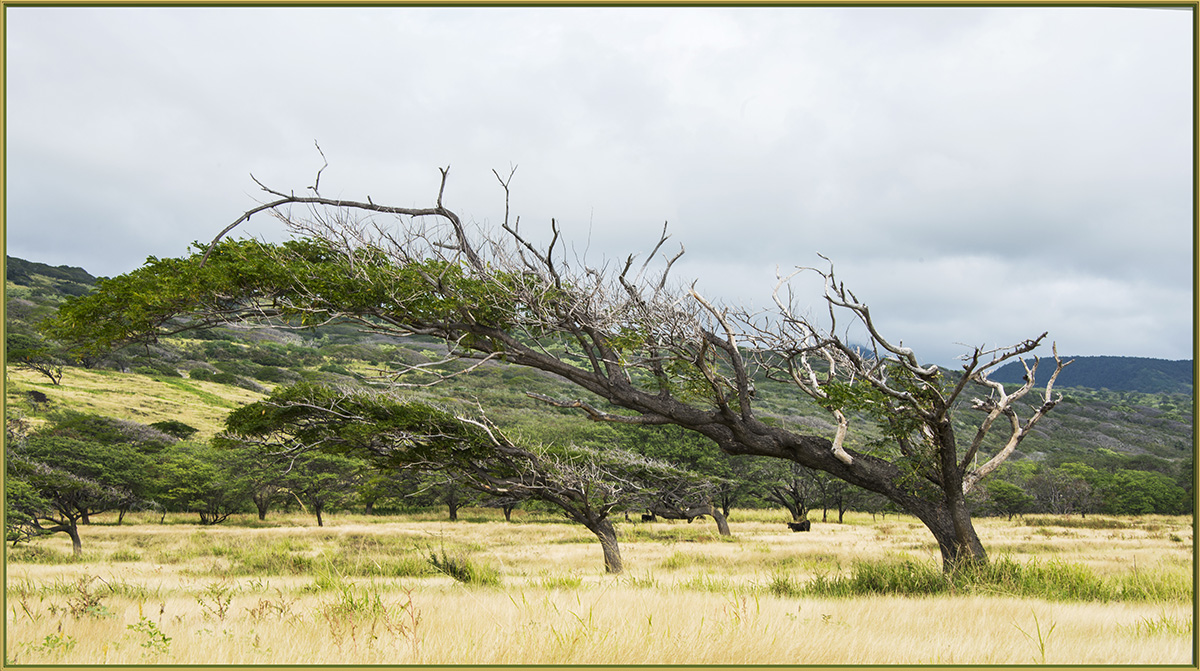
This is an excellent example of the "Krumholz Effect".(Various other spellings all accepted)
Krumholz is the deformed, one-sided growth produced by fierce winds that bend the tree and allow growth in only one direction. The tree is often stunted in overall growth if other conditions are poor. The well-known wind-blown Monterrey pines are another example.

Common trees showing krumholtz formation include European spruce, mountain pine, balsam fir, red spruce, black spruce, subalpine fir, subalpine larch, Engelmann spruce, limber pine, and lodgepole pine. Instances of the krumholtz form of black spruce, Picea mariana, are found in the northern Canadian boreal forests. Krumholtz-form black spruce and balsam fir are abundant in the alpine transition zone of the White Mountains of New Hampshire.

D800
2014:02:06 12:52:09
28-300mm @ 62mm
1/50 sec, f/11
Mode: Av
Metering: Spot
ISO: 250
White balance: Auto
Flash: Off

Comments

8 comments
Comment posted by Alan LaFaver on March 22, 2014 at 2:26 PM
Thank you for the lesson. That is really cool!

Is this one of the soft images? I can't tell too much from the large version. Have you fine tuned AF with this lens?
What were you focusing and spot metering on?
Was this on a tripod?

Al
Registered on February 28, 2014, 18 Posts, 147 Comments
Comment posted by SandyRichardsBrown on March 22, 2014 at 2:33 PM
This IS from the "problem" lens - the softness isn't too bad here, but very noticeable on every avian image.
Spot metering and focus on tree branches, hand-held.
Sandy
Registered on November 24, 2003, 3937 Posts, 12909 Comments
Comment posted by Buck Ward on March 22, 2014 at 2:50 PM
I'm unfamiliar with the term, and these trees are amazing. The trees in the background reiterating the shape really add punch. I suggest a lower POV to raise the horizontal part of the foreground tree above the hill in the background, to provide clear definition of the shape of the tree.
Registered on December 8, 2003, 96 Posts, 1917 Comments
Comment posted by SandyRichardsBrown on March 22, 2014 at 2:52 PM
Thanks, Buck - but could not get any closer or lower due to fences, FG mounds, and a mud pit.
S
Registered on November 24, 2003, 3937 Posts, 12909 Comments
Comment posted by Howard Cheek on March 22, 2014 at 3:04 PM
Excellent image that documents the "Krumholz Effect", learned something new today :smile:
Great presentation, well done Sandy! :toast:
Registered on July 24, 2008, 1201 Posts, 10758 Comments
Comment posted by Buck Ward on March 22, 2014 at 3:51 PM
I shoulda knowed. As Rosanna Rosanadana used to say," It just goes to show - it's always something."
Registered on December 8, 2003, 96 Posts, 1917 Comments
Comment posted by Michael Cothran on March 22, 2014 at 6:38 PM
We learn something new everyday! Thanks for the information. My big "nit" with the image is that the trees blend in too well with the landscape, rendering them quite difficult to see well.
Registered on December 5, 2012, 31 Posts, 730 Comments
Comment posted by John Tobias on March 28, 2014 at 11:00 AM
The larger image shows the trees well, IMHO. A lower POV would have been nice, but fully understand why you could not go it. Reminds me of driving west on a Kansas highway where all of the trees leaned in the same direction. Thanks for sharing.
Registered on September 12, 2009, 2120 Posts, 6455 Comments