Mockingbird
by Sharron Sims
D7100, 80-400 @ 400mm, 1/500, f/5.6, ISO 400.
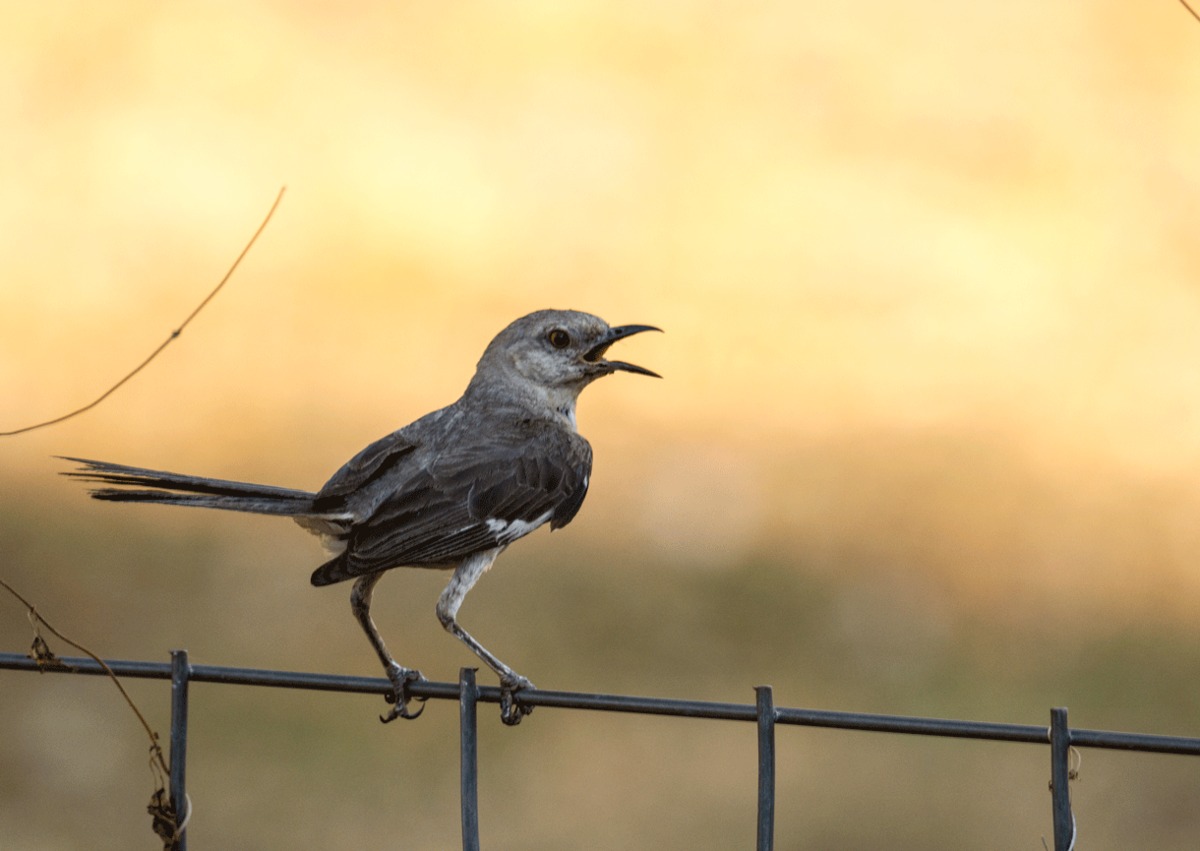
Northern mockingbird as seen on family property in central Texas. The fence perch may be less than ideal. Taken late in the day, just before sunset. I've done very little bird photography and am trying to learn so comments welcome.

Comments
6 commentsI'll leave the suggestions specific to photographing avian subjects to some of our resident avian experts here on NPN, but I will suggest that the IQ seems to be a little less than optimal, and specifically appears to have some movement issues, either subject or camera. As I use a D7100 as a backup body and Jenaya uses one almost exclusively, I can attest to the fact you can certainly push the ISO up and still get excellent results with that body. I think the combination of extremely dense pixels and very slight movement (i.e. shutter speed was not sufficient to absolutely freeze the moment) has taken the edge off here. That's one thing us photographers have had to adapt to in recent years with increasingly high resolution sensors...a 24MP ASP-C (crop/DX) sensor means a lot of photo sites in a very, very small area so minor movement means big consequence. Of course, increasing the ISO means decreasing the dynamic range, which in this case would be a very high priority to maintain! Still, I'm betting an increase to ISO 640 or 800 would have done the trick. Another option would be using fill-flash with a diffuser in situations like this (a whole other exciting area of nature photography to explore!).
All this assumes you were either hand-held or on a monopod and that your lens did not have VR engaged (which, if engaged, really should have handed this at 1/500). If you were on a tripod, make sure everything is snugged down tightly and the legs and head are adequate to support this focal length. If you were not on a tripod and did have VR engaged, I've found pressing the shutter release halfway down to activate the VR and waiting for at least a second for it to settle and "learn" your movement pattern often produces MUCH better results.
I did look through your other avian images and would suggest all are very nice but could all be improved with just a little better shot discipline. I'm sure you've heard of the 1/focal length rule, which with a DX camera would mean 1/1.5X focal length as a general guideline for hand-holding longer lenses (so 1/600sec here). HOWEVER whether you have the "old" D version of the 80-400 or the newer and much-improved G version, both lenses' VR system should address that.
Whew I should have stopped at "Nice shot!"
Finally, I'm wondering if this is a fairly substantial crop? If not (and even to a degree, if so), it looks like just a little tighter shot discipline would take this from very, very nice to absolutely superb. I genuinely find this to be a highly attractive and compelling image, so don't let my rambling exploration of possible improvements lead you to think otherwise!