It was not until yesterday that it dawned on me that I could post a state bird from other than my own state, so now I have only today and tomorrow to help fill in the blanks.
If you want to help, we still are missing some very common birds. There is a convenient list of state bird species, organized by state and by species here:
http://www.50states.com/bird/
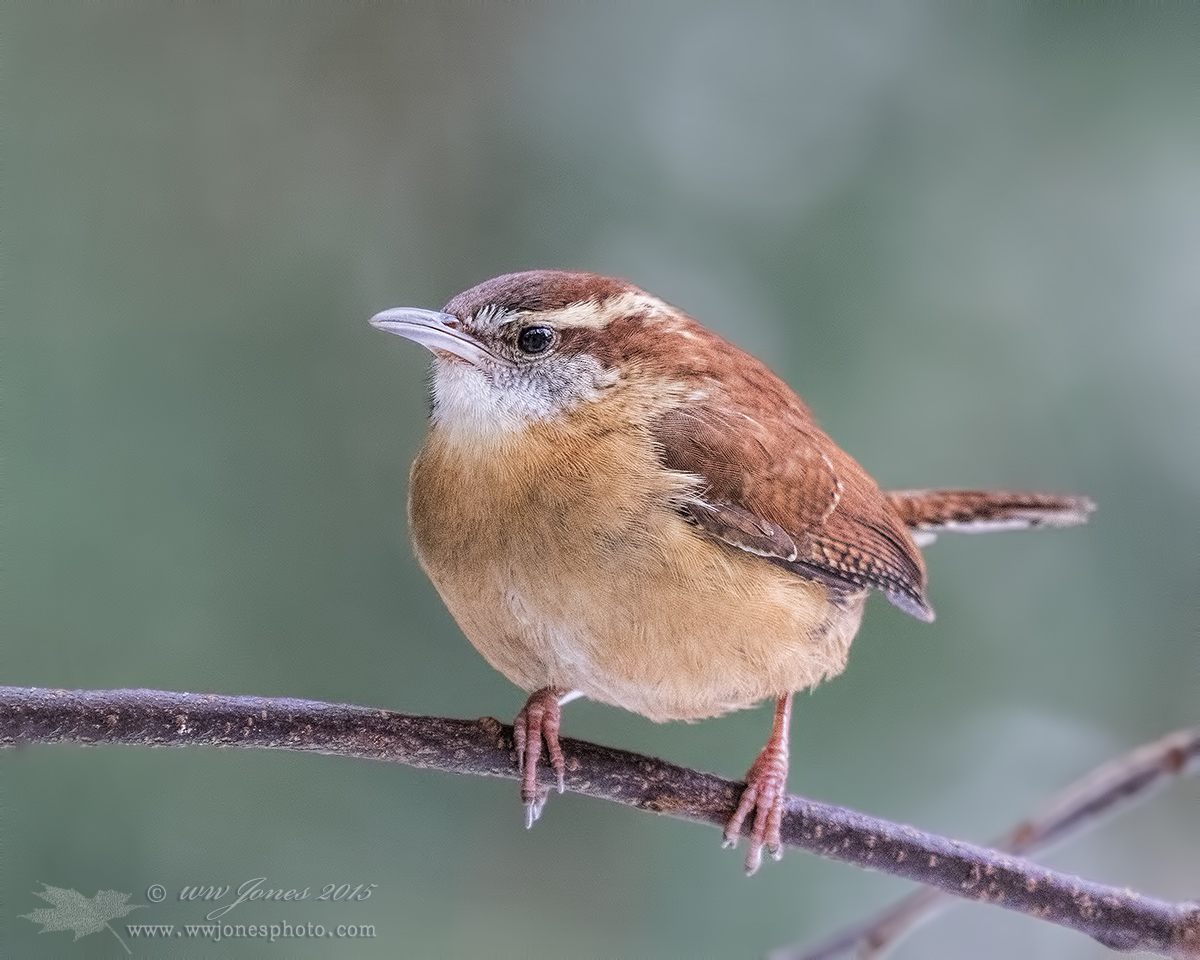
The Carolina Wren (once called the Great Carolina Wren) is the state bird of South Carolina. This is the last one I saw up here in northern NY, which is on the northern fringe of the range for this species. I was holding out for a better picture, but the poor little birds did not survive the brutal cold we had all of last February (sustained temperatures of -20 to -34 degrees in my area). Have not seen a single one this year, but I know they will be back with global warming as our northern forest retreats to the remains of the arctic.
Canon 7D2; Canon 100-400
1/80 sec. @ f/6.3; ISO 5000 (That's right, not much light in the pine woods.)
Tripod with Acratech GP ballhead in gimbal mode.

Comments
7 commentsALLEN: I did not do any noise reduction on the Raw file in ACR. It's only a slight crop from full frame, so that helps, and in addition, the exposure was increased only 15% in ACR. I try to avoid any adjustments that accentuate noise. Another thing that worked well on this particular image is that there are no very dark areas where noise would stand out. When I have to resort to high IS0, the first thing I do in Photoshop is to make a selection of the in-focus parts (typically using the quick-selection tool and refine edge) and make that a new layer. Then I can use as much noise reduction as I want (with Topaz DeNoise) on a copy of the the original background layer. Noise reduction on the in-focus parts can then be more gentle and customized, used only where needed. Noise is much more visible in smooth areas, so you don't need much where there is lots of fine texture, such as bird feathers.
It's important to remember that post-production can't take credit for all of the way noise looks. Noise is just more apparent in some images than in others. Close shots with lots of feather detail don't show the noise like shots made further away, because as the "busy" detail fades into the distance, the subject looks smoother, making the noise more evident. It might also help that this is not a dark-colored subject.
Thanks for the information on your workflow.
Albert Darmo
Canada
You did well with this little wren. I like subtle shading on the bee and the nice feather detail on the head. The bird stands out from the BG and you can't ask for a better placement of the branches in the lower part of the frame