With enough feedback and interest on this little known gem, I offer another shot of this natural wonder found in west Texas.
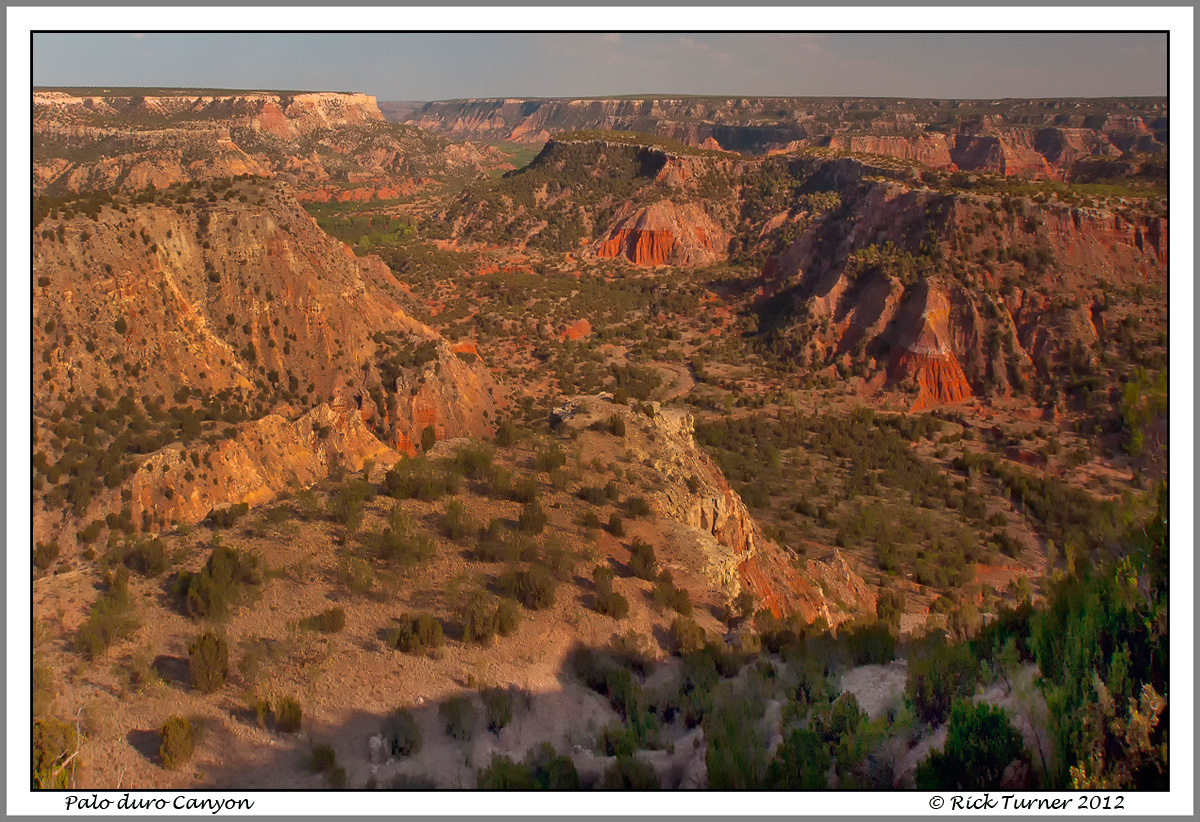
Palo duro Canyon Sate Park of Texas opened in 1934. The canyon is almost 20 miles wide and 120 miles long with a depth of almost 800 feet.
The canyon was formed from water erosion by the Red River (the canyon is deep red). This is often touted as the second largest canyon in North America.
This is shot from one of the overlooks in the state park.
Often called the Little Grand Canyon.
From the Texas Historical State Association ~
"Humans have resided in the canyon for approximately 12,000 years. Early settlers were nomadic tribes that hunted mammoth, giant bison, and other large game animals. Later, Apache Indians lived in the canyon, but were soon replaced by Comanche and Kiowa tribes who resided in the area until 1874. At that time, Col. Ranald Mackenzie was sent into the area to transport the Native Americans to Oklahoma. Col. Mackenzie and the 4th Cavalry were able to capture more than 1,400 horses belonging to the tribe. After keeping some of the best horses for themselves, the remainder were taken to nearby Tule Canyon and destroyed. Cut off from their only means of transportation, the Native Americans soon surrendered.
In 1876, Charles Goodnight entered the canyon and opened the JA Ranch. At its peak, the ranch supported more than 100,000 head of cattle. Goodnight operated the ranch until 1890. Although only a fraction of its original size, the JA Ranch remains a working ranch today."
The movie "Lonesome Dove" was base on Charles Goodnight.
Sony a 700
16-80 Zeiss f3.5 zoom
ISO 400
f16 @ 1/125
tripod and ball head
LR3 raw
CS5 corrections.


Comments
7 commentsInteresting bit of Texas history in your notes dating way back to the first human habitation.
The slaughter of all those horses sure shows the ugly belly of the beast.
And what man is capable in the name of war.. Perhaps extermination is the better word for it
A suggestion for improvement would be to cool it off some, the reds are a bit much IMHO.
For anyone interested in a more in depth history (that seems well balanced to me) there's a recent book called "Empire of the Summer Moon" that covers in detail the Comanche Wars and the role of Palo Duro Canyon in that conflict.