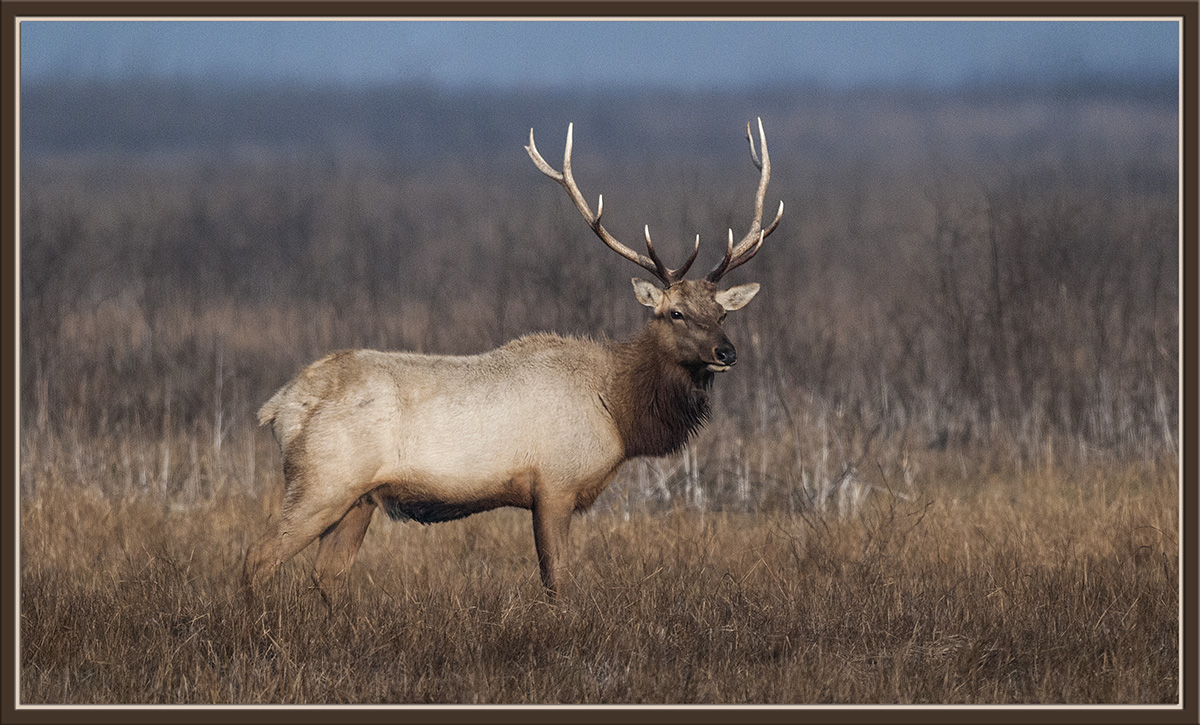
Tule Elk
by SandyRichardsBrown
Pt. Reyes, CA
D800
500mm
1/5000 sec, f/5
Mode: Av
Metering: Spot
ISO: 640
AF mode: AF-C
White balance: AUTO
Flash: Off
(From online info:)
Of the six subspecies of elk known to have inhabited North America in historical times, four remain, including the Roosevelt (C. canadensis roosevelti), Tule (C. canadensis nannodes), Manitoban (C. canadensis manitobensis) and Rocky Mountain (C. canadensis nelsoni).[13] The Eastern elk (C. canadensis canadensis) and Merriam's Elk (C. canadensis merriami) subspecies have been extinct for at least a century. The tule elk is the smallest.
The tule elk (Cervus canadensis ssp. nannodes) is a subspecies of elk found only in California, ranging from the grasslands and marshlands of the Central Valley to the grassy hills on the coast. The subspecies name derives from the tule on which it feeds, which grows in the marshlands.
When the Europeans first arrived, an estimated 500,000 tule elk roamed these regions, but by 1870 they were thought to be extirpated. However, in 1874-1875 a single breeding pair was discovered in the tule marshes of Buena Vista Lake in the southern San Joaquin Valley. Conservation measures were taken to protect the species in the 1970s. Today, the wild population exceeds 4,000. Tule elk can reliably be found in Carrizo Plain National Monument, Point Reyes National Seashore, portions of the Owens Valley from Lone Pine to Bishop, and on Coyote Ridge in Santa Clara Valley, San Jose, California.

Comments
5 comments